
Guide
Complete Europe Truck Driver Guide for Foreign Drivers
Get clear, reliable information on truck driver jobs in Europe, work permits, Code 95, Driver CPC, licence exchange, tachograph rules, residence permits, medical exams, and legal compliance for professional drivers.
This guide is designed to help foreign drivers, transport companies, and recruiters understand the full process, step by step, from eligibility and required documents to job applications, permit approvals, renewals, and long-term work opportunities across Europe.
- Understand Code 95 and Driver CPC
- Work Permit and Residence Permit Guide
- Tachograph and Driving Compliance
- Complete Guide to Truck Driving Jobs in Europe
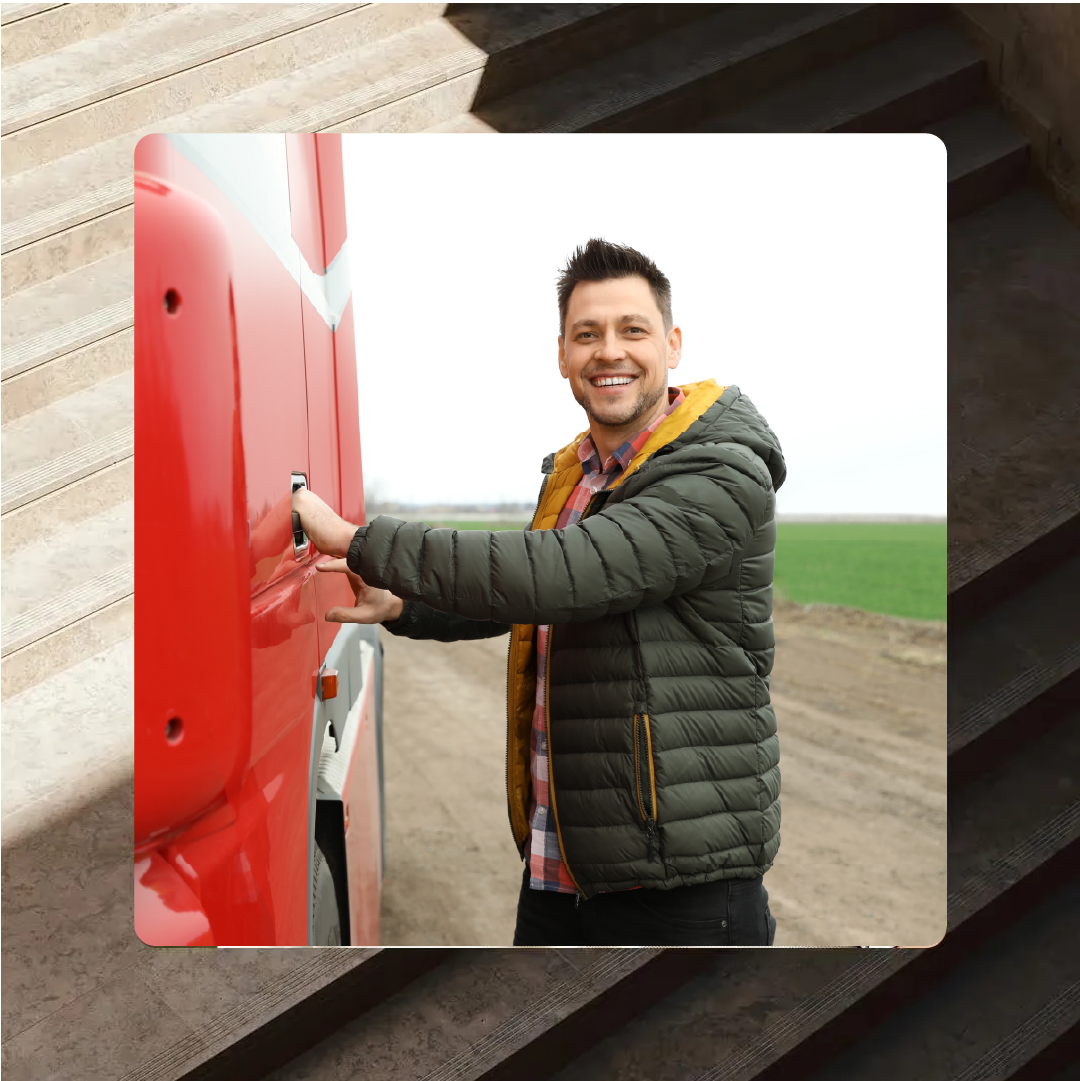
Complete Europe Truck Driver Guide for Foreign Drivers
Europe has one of the world’s largest and busiest road-freight networks, and demand for qualified heavy-vehicle drivers remains strong across the EU. For foreign drivers, the key to securing truck driver jobs in Europe is having the right documents in order before applying — a valid CE licence, Code 95, a driver card, and, for non-EU nationals, lawful work and stay authorisation. This guide explains the full set of requirements and how the process works from eligibility to long-term residence, for both EU and non-EU drivers.
Who Can Work as a Truck Driver in Europe
Both EU/EEA and non-EU nationals can work as professional drivers in Europe. EU/EEA citizens have the right to work in any member state without a permit, while non-EU nationals generally need a work permit and a legal stay status before starting. Across both groups, employers expect the same professional qualifications: a valid heavy-vehicle licence, Code 95, and a digital tachograph driver card. You can confirm your standing with a free eligibility check before applying.
Driving Licence Requirements and Recognition
Most truck driver jobs in Europe require a Category CE (C+E) licence, which is harmonised across the EU and permits operation of a tractor unit towing a semi-trailer over 750 kg. Category C alone covers fewer roles, and ADR or tanker work requires additional certification in addition to CE. An EU/EEA licence is mutually recognised across every member state and can usually be exchanged on residency without retaking tests. A non-EU licence is handled under each country’s rules and any bilateral agreement — you can often drive on it for a limited period (commonly up to one year) before you must exchange it, and some licences require additional testing. Always confirm the rule in your destination country first. See our driver licence guide and licence eligibility check.
Code 95 and Driver CPC
Code 95 is the EU-wide professional qualification (Driver CPC) required to drive commercially, and it is mandatory across the EU for most paid heavy-vehicle work. It is maintained through periodic training — 35 hours within a five-year cycle, usually delivered as five modules through an authorised provider. Because a valid Code 95 is recognised in every member state, your qualification carries over when you move country, and employers rarely allocate a truck without it. Non-EU drivers can also obtain Code 95 through authorised centres in the EU. Full details are on our Code 95 eligibility page.
Driver Card, Tachograph and Driving-Hours Compliance
A digital tachograph driver card records your driving, rest, and work time and is required for vehicles fitted with a digital tachograph. Your country of residence issues it, and a valid EU/EEA card is valid while it is valid. The same driving-hours rules apply across the EU: a maximum of 9 hours driving per day (extendable to 10 hours twice a week), a break after 4.5 hours, and required daily and weekly rest periods. Roadside checks are common, and breaches can penalise both driver and operator, so clean records directly affect your employability. More is on the tachograph eligibility page.
Medical and Psychological Examinations
All EU countries require professional drivers to pass a medical fitness assessment for heavy-vehicle driving, and several also require a psychological assessment. Both must be carried out by approved specialists and renewed periodically. Some employers arrange these during onboarding, while others expect them before your first assignment.
Work Permit, Work Visa and Short-Stay Rules
Most non-EU drivers need a work permit, and many EU countries now issue a combined residence-and-work permit, while others require a separate work permit plus a long-stay national visa. In most countries, the employer initiates the application, and the permit is tied to a specific employer and role, so changing jobs usually requires a new permit. A short-stay (Schengen) visa allows visits of up to 90 days but does not permit employment, so it cannot be used to start a driving job. In short, the work permit supports your right to work, and the work visa supports your right to enter and stay.
Residence and Long-Term Stay
For longer-term work, many non-EU drivers use a combined temporary residence-and-work permit that bundles stay and employment into one document. After a continuous period of legal residence — commonly five years — drivers may qualify for permanent residence, which removes employer restrictions, and this can later open a path toward EU citizenship. Drivers employed by an EU haulier and running cross-border routes are also usually issued a driver attestation confirming legal employment for roadside checks across member states. Our residence card guide covers the framework.
Pay, Tax, Social Security and Banking
Truck driver pay in Europe usually combines a base salary with per-diem allowances for time spent abroad on international routes, plus possible overtime, night, and route supplements. Because allowances can form a large share of total income, always request a written breakdown of base pay, per-diems, bonuses, and deductions before signing — current figures are on our salary insights page. You will generally need a tax identification number in your country of employment so payroll and income tax can be processed, and a local or SEPA bank account to receive salary and manage rent and contributions. Lawfully employed drivers are enrolled in their country ofemployment’ss social security system, which covers health, accident, pension, and disability benefits, and posted or multi-country drivers may need an A1 certificate confirming which country’s system applies. For health and relocation cover, see our health insurance and travel insurance guides.
The Mobility Package and Posting of Workers
Under the EU Mobility Package and the Posting of Workers Directive, when you perform cabotage or cross-border operations in another member state, you may be entitled to that host country’s minimum pay and conditions for the time worked there — even if your contract is with an employer in a different country. Enforcement is increasing across the EU, and pay packages should account for it.
Language and Daily Work
For domestic routes, basic knowledge of the local language helps with paperwork, customers, and loading points. On international routes, English is increasingly accepted as a working language across many European fleets. Even basic local-language skills widen your job options and ease daily life, which matters at contract renewal.
Apply through FastDriver.eu.
Creating a free driver profile makes you visible to European employers searching the platform. You can browse live roles on the vacancies page, and your profile captures CE status, Code 95, route history, trailer experience, and language so that employers can match you to compliant, route-ready roles across Europe.
Truck Driver Jobs in Croatia (EU): Work Visa, Code 95, Permits & Legal Requirements Guide
Complete FAQ for truck drivers who want to work in Croatia and across the EU. Learn about work permits, residence rules, Code 95, license exchange, taxes, social security, tachograph laws, employer changes, and long-term stay options.
 Lithuania
 Estonia
 Germany
 Netherlands
 Belgium
 Czechia
 Slovakia
 Slovenia
 Hungary
 Bulgaria
 Croatia
 Poland
 Austria
 France
 Spain
Spain
 Italy
Italy
 Portugal
 Ireland
 Denmark
 Sweden
 Finland
 Greece
 Norway
 Switzerland
 Malta
Malta
 Cyprus
 United Kingdom
 Iceland
 Serbia
 Latvia
 Bosnia and Herzegovina
 North Macedonia
 Albania
 Montenegro
 Moldova
 Turkey
 Kosovo
 Georgia
 Armenia
 Azerbaijan
 Ukraine
 Belarus
 Russia
 Andorra
 Liechtenstein
 Monaco
 San Marino
 Vatican City
Europe Truck Driver Guide: Work Visa, Code 95, Permits, Tax & Legal Requirements
Everything truck drivers need to know about working in Europe — work visas and permits, Code 95 and Driver CPC, licence exchange, tax and per-diems, social security, tachograph laws, changing employers, and long-term stay options across the EU. The questions below cover the full process for both EU and non-EU drivers, from eligibility and required documents to permit approval, renewal, and long-term residence.- How long does it take to get an EU work permit for truck drivers?
- Do drivers need both a work permit and a residence permit in Europe?
- Can I come to Europe on a short-stay (Schengen) visa to look for driver work?
- Can you work in Europe while your permit renewal is pending?
- Do you need a new work permit when changing employers?
- Can non-EU drivers obtain Code 95 in Europe?
- How long can you drive in Europe on a foreign licence?
- What is a driver (tachograph) card, and how do I get one?
- Is a police clearance certificate required for an EU work permit?
- Is a medical examination required for professional drivers in Europe?
- Do foreign drivers pay into the EU social security and pension system?
- Do truck drivers need an EU Tax ID, and how is tax handled?
- Are daily allowances (per-diems) taxable in Europe?
- Do I need an EU bank account to get paid?
- What are the EU driving-hours rules for truck drivers?
- Who is responsible for insurance in a road accident?
- What can cause an EU work permit to be cancelled?
- How many years do you need for permanent residence in the EU?
- How do I apply for truck driver jobs across Europe?
Official Government References
Because requirements differ by country, always confirm procedures, documents, and timelines with the official EU institutions below and with the immigration and transport authorities of your specific destination country:
- EU Immigration Portal (entry, work, and residence information for non-EU nationals) — https://immigration.europa.eu
- Your Europe (living, working, and residence rights across the EU) — https://europa.eu/youreurope/citizens
- EURES – European Employment Services (jobs and labour mobility across the EU/EEA) — https://eures.europa.eu
- European Commission – Mobility and Transport (Driver CPC / Code 95, tachograph, and driving-time rules) — https://transport.ec.europa.eu
For work permits, visas, licence exchange, and residence procedures, you must also check the competent national authority in the country where the employer is based, as rules vary by nationality, employer, region, and job category.
Disclaimer
This guide provides information on truck driver requirements and job opportunities in Europe. Requirements vary by country, nationality, and employer, and it does not guarantee any job placement, work permit, or visa decision. Always verify procedures with each destination country’s immigration and transport authorities and the official EU Immigration Portal. All final decisions rest with the relevant national authorities.
Author: fastdriver.eu

Driver Jobs in Europe
Work with trusted European employers.
Start your international driving career.
Last Updated: June 15, 2026
This content is reviewed and updated periodically to maintain accuracy and relevance.
Why FastDriver.eu ?
Our mission is to simplify truck driver recruitment across Europe.

Expanding Access
We continuously expand access to qualified, verified EU and non-EU truck drivers across Europe. By adapting to evolving transport demands and regulatory frameworks, we enable employers to secure talent efficiently and at scale.

Streamlining Recruitment
FastDriver.eu removes complexity from the hiring process by simplifying job posting, candidate shortlisting, and coordination. Our structured workflows reduce administrative effort, accelerate hiring timelines, and support informed decision-making.

People-Centered Approach
We place employers and drivers at the core of our platform. By combining industry expertise with a responsible, transparent approach, we deliver trust, reliability, and peace of mind throughout the recruitment journey.
FastDriver.eu is where truck drivers get hired:
Our job portal connects logistics companies with verified truck drivers across Europe and beyond.
5K+
Driver-job matches completed
43+
Countries and territories
200+
Hiring companies

5K+
Driver-job matches completed
43+
Countries and territories
200+
Hiring companies
Get Started with FastDriver
Our Platform
We connect truck drivers, transport companies, and recruiters across Europe through a dedicated driver job platform.

Employer
Register as a company to post truck driver jobs, manage vacancies, and connect directly with qualified professional drivers.

Drivers
Register as a driver to explore truck and commercial driving jobs across Europe and apply directly to verified employers.

Recruiters
Register as a recruiter to post driver jobs, reach active professional drivers, and support employers with fast and efficient hiring.

Trusted by Employers Across Europe

Successful hiring satisfaction

Of drivers and employers receive active support via FastDriver.eu

10+
Do you have any questions?
We support truck drivers, transport companies, and recruiters with job opportunities and driver recruitment across Europe, helping drivers find work and employers hire qualified professionals. Our job portal, FastDriver.eu, allows companies and recruiters to post driver jobs and connect directly with professional truck drivers through a simple, efficient platform.

