
DENMARK RESIDENCE CARD
Denmark Residence Card – Why It Matters
Stay, work, study, and build your future in Denmark with the right residence documentation. A Danish residence permit helps prove your legal stay, residence status, and permission to live and work in the country for employment, business, study, family, or long-term purposes. Denmark is an EU member and part of the Schengen Area. Still, it runs its own national work schemes, so learn about Denmark residence permit eligibility, required documents, application steps, renewal rules, work rights, and country-specific guidance before starting your residence process.
- Legal Stay in Denmark
- Work & Residence Rights
- Residence Card Requirements
- Renewal & Document Guidance

Denmark Residence Permit: Types, Requirements and How to Apply
If you plan to live, work or study in Denmark for more than 90 days, the first thing you need is a Danish residence permit — the document that establishes your legal residency in the country. A visa or visa-free entry lets you enter Denmark; the residence permit lets you stay. Without it, a long stay is unlawful, regardless of how you arrived. This guide explains the main routes, who qualifies, the documents you need, how to apply through SIRI, the fees, and how to build toward permanent residence and citizenship.
Denmark is best understood as a set of route-specific national permits rather than a single universal document. Importantly, Denmark is outside both the EU Blue Card and the EU Single Permit rules, so skilled non-EU workers apply through Danish national schemes — the Pay Limit Scheme, the Positive Lists, the Fast-track Scheme and others — not an EU Blue Card. EU, EEA and Nordic citizens do not need a permit. After eight years, you can usually apply for permanent residence.
What is a Danish residence permit?
A Danish residence permit is an official authorisation that allows a non-EU national to reside in Denmark for more than 90 days legally. It is separate from a visa — the visa permits entry; the permit permits the stay. Most work and study permits are handled by SIRI, the Danish Agency for International Recruitment and Integration, while the Danish Immigration Service usually handles family reunification and permanent residence. Once granted, you receive a residence card and, after arrival, a CPR number that is your key to services. Denmark uses the Danish krone, not the euro. Because Denmark is in the Schengen Area, the card also allows short-stay travel across Schengen. EU, EEA, and Nordic citizens have free movement rights and do not need a permit.
Types of residence permits in Denmark
Denmark’s main national work routes are:
- Pay Limit Scheme: for any job, regardless of field, where the salary meets a high annual threshold.
- Positive Lists: for occupations facing documented shortages — there is a list for higher-education roles and one for skilled work — where the salary can be lower than the Pay Limit.
- Fast-track Scheme: for certified employers, offering quick processing and a fast job start.
- Start-up Denmark and researcher tracks, for entrepreneurs and academic staff.
There is no EU Blue Card or single permit in Denmark. EU, EEA and Nordic citizens do not use these routes at all.
Alongside the ordinary Pay Limit Scheme, there is a Supplementary Pay Limit Scheme, which allows a permit at a somewhat lower salary but imposes stricter conditions, including that the position must have been publicly advertised and that the national unemployment rate is below a set level. From 1 January 2026, Denmark will raise the salary thresholds under both pay-limit schemes and increase application fees. It trims the Positive Lists and uses updated salary statistics to assess whether a proposed wage qualifies. The old Greencard scheme is no longer open as a first-time route. Because these figures and lists are revised regularly — the Positive Lists twice a year, in January and July — always check the current thresholds and occupation lists on the official pages before you build a plan around a particular route.
Who can apply?
Non-EU nationals apply through the national scheme that fits their job. The Pay Limit Scheme suits any high-earning role; the Positive Lists suit occupations on the shortage lists, which are updated twice a year; the Fast-track Scheme suits employees of certified employers; and Start-up Denmark suits founders with an approved innovative business. You need a valid passport, a confirmed job or business, and to meet the salary or occupation criteria of your route. EU, EEA and Nordic citizens have the right to live and work in Denmark; EU and EEA citizens register their residence, and Nordic citizens need do nothing further.
Do you need a visa first?
You or your employer applies to SIRI, usually through its online platform, before you move. Once the permit is granted, you travel to Denmark, collect your residence card and complete local registration. Under the Fast-track Scheme’s quick job start, an employee who is already able to enter Denmark can begin work on a provisional basis while the formal permit is processed. Confirm your entry requirements before you travel, because they depend on your nationality and route.
Documents you need
Prepare a complete, well-organised package — a mismatched occupation code is a common cause of refusal:
- A valid passport with copies of used pages
- The SIRI application and your employment contract
- Evidence that the job matches your route — the salary for the Pay Limit Scheme, or the exact occupation code for a Positive List role
- Proof of qualifications, with certified translations where required
- Proof of the employer’s certification for Fast-track cases
- A photograph, with biometrics taken at a mission or on arrival
Because the Positive Lists change on 1 January and 1 July, it is wise to save a dated copy of the list showing your occupation on the day you apply. Confirm the current requirements with SIRI before submitting.
Establish your legal purpose.
For the Pay Limit Scheme, the job must offer a salary above the annual threshold, which rose to DKK 552,000 in 2026. For a Positive List route, your specific job title and occupation code must match an entry on the current list, and the salary must meet the scheme’s floor. For the Fast-track Scheme, your employer must be certified by SIRI. Danish labour norms — proper pension contributions and payment through a bank — must be met in all cases. The purpose must be genuine and precisely documented, because incorrect classification leads to rejection even for otherwise qualified workers.
Register your address
After arriving with your permit, you register locally to obtain a CPR number at the municipal citizen service (Borgerservice), which gives you access to the health system and a public health card, and you set up MitID for digital access and a tax card with the tax authority. Accompanying family members register their own CPR numbers, and children are enrolled in school or daycare. There is no fee for CPR registration or the health card. Keep your registration current if you move.
How to get a residence permit in Denmark, step by step
- Secure a job that fits a Danish scheme — the Pay Limit salary or a Positive List occupation.
- Your employer supplies the contract and, for Fast-track, uses its certification.
- Apply to SIRI online and pay the fee.
- Attend an identity and biometrics appointment at a mission or centre.
- Wait for SIRI’s decision — often about a month, or faster under Fast-track.
- Travel to Denmark and collect your residence card.
- Register for a CPR number, MitID and a tax card.
- Begin or continue work, and keep your permit conditions in place.
Processing time
Typical decision times run from about one month for mainstream work schemes to around ten business days under the Fast-track Scheme, about two months for students, roughly seven months for spouse family reunification, and about eight months for permanent residence. SIRI aims to decide Positive List applications within roughly a month of a complete file, including biometrics. Missing documents are delaying the process. Please submit a thorough application and start any renewal before your permit expires.
Government fees and costs
First-time government fees generally range from about DKK 3,060 to DKK 8,490 depending on the category, with a Positive List case-processing fee of around DKK 6,055 in 2026, usually paid by the employer, and accompanying family members paying around DKK 3,025 each. Applicants filing from abroad may also face an embassy handling fee. Biometrics are free, as is CPR registration. Budget for certified translations of degrees and vocational certificates. Fees rose in 2026, so confirm the current schedule before you pay.
Validity and renewal
A work permit is granted for a duration tied to your job and scheme and is renewable. At the same time, you continue to meet the conditions, with the Positive List route in particular, renewable over time toward permanent residence. Switching jobs requires a new permit application, but your new employer can apply before your current permit expires, so there is no gap in your right to work if you apply in time. If your job ends, you generally have a grace period — commonly six months — to find a new eligible employer at the same salary level, or the permit lapses.
Changing employer or purpose
Changing employers means filing a new application with the new employer, and you may keep working on your existing permit until a decision is made if you apply before it expires. Moving between schemes — for example, from a student permit to a Positive List work permit — is administratively straightforward if you meet the conditions of the new route. Always keep your work and residence status aligned and apply before deadlines, because working outside the terms of your permit can lead to its loss.
Benefits of holding a permit
A valid permit gives you legal identity in Denmark and, through your CPR number, access to the tax-funded health system, public services and digital government. Denmark is known for its strong welfare state, work-life balance and genuinely English-friendly environment, though income tax is high. Because Denmark is in the Schengen Area, your residence card also allows short-stay travel across other Schengen countries. Accompanying spouses receive full access to the labour market, and continuous legal residence counts toward permanent residence and, in time, citizenship.
Family reunification
Workers can bring a spouse or partner and children under 18 through family reunification or as accompanying family members, depending on the permit. Accompanying spouses receive permits with full access to the Danish labour market and register their own CPR numbers, while children are enrolled in school or daycare. The sponsor must meet the relevant income and housing conditions. Each family member has their own application, and processing for spouse reunification takes longer than for work permits, so plan accordingly.
Pathway to permanent residence and citizenship
Permanent residence under Danish national rules usually requires eight years of uninterrupted legal residence, together with the basic requirements and at least two of four supplementary requirements, such as employment history, income, Danish language and active citizenship. Some applicants who meet all four supplementary requirements can qualify after four years. A minimum level of Danish is generally required. Danish citizenship is generally possible after nine years of residence, with higher Danish language requirements and a citizenship test, and Denmark has accepted dual citizenship since 2015. See our Danish citizenship guide.
For professional drivers in Denmark
An honest note for drivers: Denmark is a strong logistics country — Copenhagen and the Øresund link to Sweden, the port of Aarhus, the ferry ports to Norway and, at Padborg on the German border, one of Scandinavia’s largest trucking and haulage hubs. However, Denmark’s work-permit routes are salary- and shortage-based: the Pay Limit Scheme threshold is high for a typical driving wage, and standard driving roles are not usually on the Positive Lists. In practice, this makes work-based residence difficult for most non-EU drivers unless the salary is exceptional or the specific role is listed. EU, EEA and Nordic drivers, by contrast, can work in Denmark freely, and Danish-based drivers run across the EU without border stops.
It is worth being concrete about the geography, because the demand itself is real. Padborg, just north of the German frontier, hosts a cluster of international haulage and freight-forwarding companies and is a natural base for continental routes. At the same time, the Øresund Bridge carries constant road freight traffic between Denmark and Sweden, and the upcoming Fehmarn Belt tunnel will further shorten the route to Germany. Aarhus is the country’s largest container port, and Esbjerg is a key North Sea and offshore-energy port. The catch is purely one of immigration eligibility rather than of work: the jobs exist. Still, Denmark’s national schemes are built around high salaries and shortage occupations, so the realistic routes into Danish driving are through EU or Nordic free movement. If that describes you, Denmark is an excellent base; if you are a non-EU driver, weigh the salary thresholds carefully before counting on a Danish work permit.
- Browse driver vacancies in Denmark.
- Register a driver profile.
- For employers — hire international drivers with compliance support
Residence permits by Danish region
Denmark has five regions. The process is the same everywhere — apply to SIRI, collect your card, and register for a CPR number — but here is what each region offers, especially for drivers.
Capital Region of Denmark
Centred on Copenhagen, the Øresund link to Sweden, the main international airport and busy distribution and warehousing, the largest job market on the island of Zealand. Driver jobs in the Capital Region.
Region of Southern Denmark
Covering Funen and southern Jutland, home to Esbjerg port and, at Padborg on the German border, one of Scandinavia’s biggest trucking and logistics hubs. Driver jobs in Southern Denmark.
Central Denmark Region
Centred on Aarhus, home to Denmark’s largest container port and a major industrial and distribution region in Jutland. Driver jobs in Central Denmark.
Region Zealand
South and west of Copenhagen, on the corridors toward Germany, including the Rødby ferry and the future Fehmarn Belt tunnel, lies a key transit region. Driver jobs in the region of Zealand.
North Denmark Region
Centred on Aalborg in northern Jutland, with the ferry ports of Hirtshals and Frederikshavn linking Denmark to Norway and Sweden, and steady freight activity. Aalborg is the region’s main commercial and distribution centre, and the ferry links make it an important gateway for goods moving between Denmark and the rest of Scandinavia. Driver jobs in North Denmark.
Related guides
- Europe residence permits — all countries
- Danish citizenship
- Health insurance in Denmark
- Denmark short-stay visa
Official government sources
- New to Denmark — residence and work permits (SIRI and the Immigration Service).
- Danish Agency for International Recruitment and Integration (SIRI) — work schemes.
- Life in Denmark — official information for internationals.
- European Commission — EU Immigration Portal.
Information only — not legal advice. The Danish authorities make final decisions, and rules and fees can change without notice. Always verify on the official portals above before you apply or pay anyone.
Drive Copenhagen. Stay Legally. Belong.
A residence card is one of the key documents for building a legal life in Copenhagen, Denmark — and for foreign professional drivers, it is more than just an identity document. It helps confirm your legal status, supports your work and residence rights, and allows you to continue your employment, renew your permits, and plan your long-term future with confidence.
FastDriver explains what a residence card means in Copenhagen, when foreign drivers and workers may need it, how it connects with Denmark’s national work schemes, and which documents may be required — with clear Denmark-specific guidance, no shortcuts, and no false promises.
Denmark Residence Permit Questions, Answered
Thinking about living or working in Denmark? Find clear answers to the most common questions about Denmark residence permits, including eligibility, application process, required documents, renewal, family reunification, permanent residence, and citizenship. Always check the latest requirements with the official Danish authorities before applying.- Denmark residence permit questions, answered.
- What is a Danish residence permit?
- Does Denmark have an EU Blue Card?
- Do EU citizens need a permit?
- Do professional drivers qualify?
- What is the Pay Limit Scheme?
- What are the Positive Lists?
- What is the Fast-track Scheme?
- Do I need a visa first?
- What documents do I need?
- Why does the occupation code matter?
- How long does it take?
- How much does it cost?
- What is a CPR number?
- How long is the permit valid?
- Can I change employer?
- What if my job ends?
- Can I bring my family?
- Does the permit allow travel in Europe?
- Does Denmark use the euro?
- When can I get permanent residence?
- When can I apply for citizenship?
- Is Denmark expensive to live in?
- What happens if I work outside my permit?
- What is Start-up Denmark?
- Where do I apply officially?
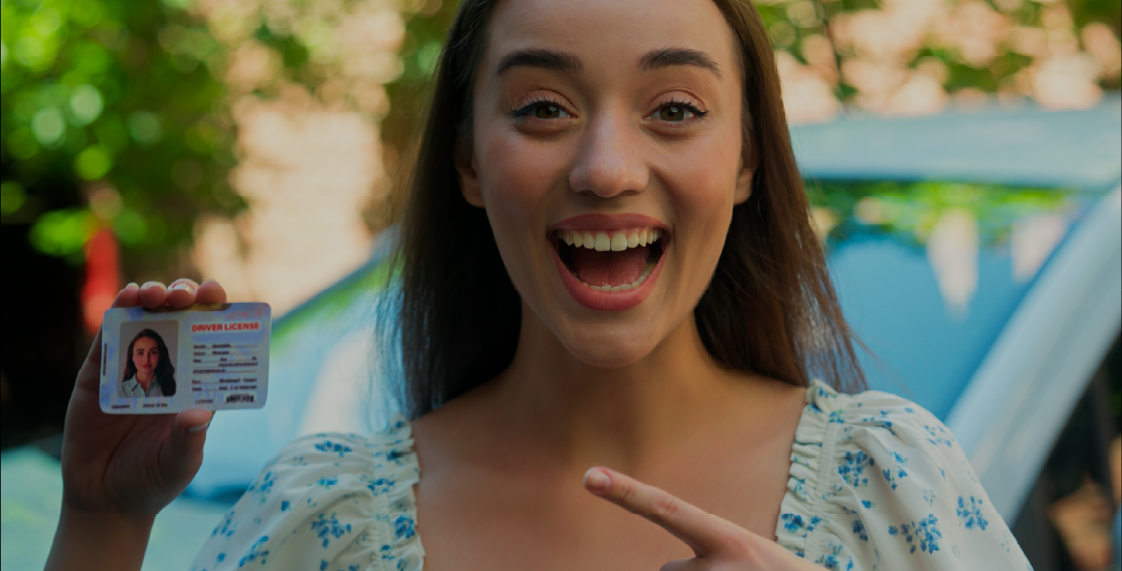
Denmark Health Insurance – A Legal Requirement
Health cover matters in Denmark, where residents receive a public health card and access to the tax-funded health system once registered with a CPR number. Arranging appropriate cover during your move helps you meet the conditions of the residence process and supports your application.
Read Guide
Last Updated: July 10, 2026
This content is reviewed and updated periodically to maintain accuracy and relevance.
