
ALBANIA CITIZENSHIP
Albania Citizenship – Legal Pathways Explained
Live, work, study, and build your future in Albania through the right legal pathway. Learn about Albania citizenship routes, residence requirements, naturalisation rules, documents, and country-specific eligibility guidance. FastDriver.eu helps applicants understand official routes before starting their Albania citizenship journey.
- Legal Pathways to Albanian Citizenship
- Residence & Naturalisation Rules
- Citizenship by Descent or Marriage
- Required Documents & Guidance
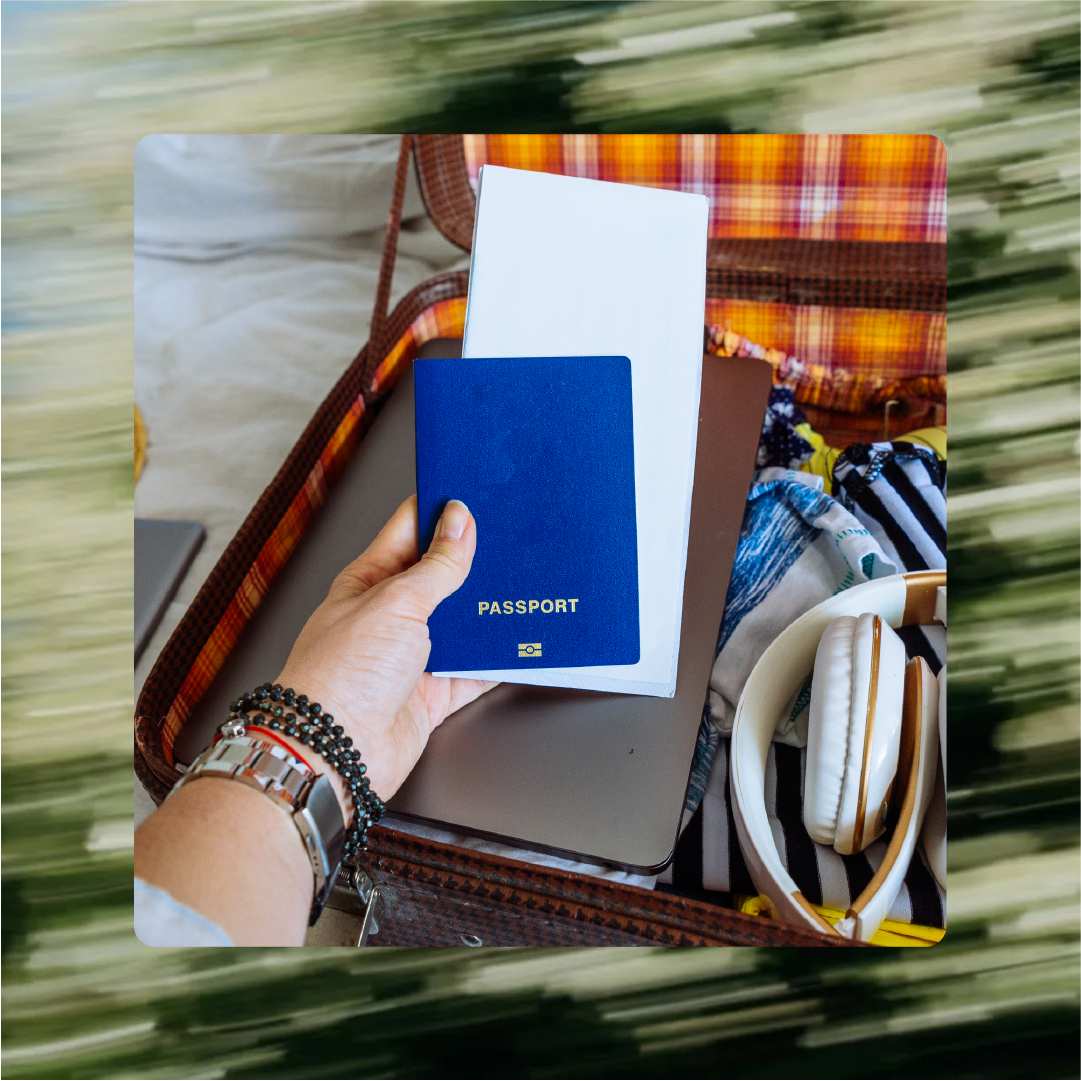
Albanian Citizenship: How to Get It, Requirements and Timeline
Citizenship is the deepest form of belonging a country can offer. If you’ve built a career, a family or a life in Albania — or you carry Albanian heritage — understanding the road to citizenship is both a practical and a personal goal. This guide walks through every legal pathway, the eligibility rules, the documents you’ll need and the realistic timeline, with links to the official Albanian authorities that make the final decision.
The short version: most foreign nationals reach Albanian citizenship through naturalisation after seven years of continuous legal residence, while people married to Albanian citizens or of Albanian origin can qualify sooner. Albania is an EU candidate country, so an Albanian passport is not yet an EU passport — but it provides visa-free short-stay travel to the Schengen Area today and offers a forward-looking path as Albania moves toward EU membership.
How Albanian citizenship law works
Albanian citizenship is governed mainly by Law No. 113/2020 “On Citizenship” (as amended), a modernised framework aligned with Albania’s EU accession commitments. It sets out how citizenship is acquired, kept, renounced and revoked, and recognises several routes: by descent, by birth on Albanian territory, by adoption, by marriage, by naturalisation, and by exceptional contribution. Applications are handled by the Ministry of Interior through its Department of Citizenship and Migration, with final approval by presidential decree. Because the rules have recently been reformed — including cutting the standard naturalisation period from ten years to seven — always confirm the current conditions with the Ministry of Interior before you apply.
The ways to become an Albanian citizen
There are several routes, each suited to a different person. By descent (origin), a child with at least one Albanian-citizen parent is Albanian from birth, anywhere in the world, and people with Albanian ancestry going back through grandparents can apply to have citizenship recognised. The “by birth on Albanian territory” rule applies to a child born to stateless or unknown-nationality parents, to prevent statelessness — it’s not general birthright citizenship. By adoption, a foreign child adopted by Albanian citizens acquires citizenship upon registration. By marriage, foreign spouses can apply after a genuine marriage and a reduced residence period. Naturalisation is the main route for foreign workers and professionals, covered below. And by exceptional contribution, citizenship can be granted by presidential decree to people who make outstanding contributions — that one is awarded, not applied for.
Citizenship by naturalisation — the requirements
To naturalise, you generally need to meet all of these: at least seven years of continuous, legal residence in Albania immediately before applying, on a valid residence or permanent-residence permit (time on tourist or short-stay visas doesn’t count, and long gaps break continuity); you must be at least 18; you need stable, lawful income to support yourself and any dependents; a clean criminal record, shown by police clearance from Albania and from previous countries of residence; basic Albanian language, assessed by an official test; a basic knowledge of Albanian society and civic life; no security concerns; and a genuine intention to keep living in Albania.
When the seven years can be shorter
Several cases cut the residence requirement. Spouses of Albanian citizens can apply after a genuine marriage of at least 3 years, plus around 1 year of legal residence. People who can prove Albanian origin benefit from a reduced period of about three years. Recognised refugees and stateless people may apply after a reduced period of lawful residence. And significant contributors may receive a short period at the Ministry’s discretion. These provisions are subject to legislative reform, so verify the current figures with the Ministry of Interior.
The documents you’ll need
A naturalisation application needs a substantial, fully authenticated package — typically a valid passport (original plus certified copies), your Albanian residence permit covering the whole qualifying period, your birth certificate (and marriage certificate if relevant) with certified Albanian translations, proof of continuous lawful residence (registration, tax records, bills, contracts), proof of financial self-sufficiency, Albanian tax-compliance records, police clearance from Albania and from every country where you lived more than 12 months, a medical fitness certificate from an authorised Albanian institution, proof of language proficiency, and the completed form with photos and the fee receipt. All foreign-language documents need certified Albanian translations, and documents from Hague Convention countries must be apostilled. Incomplete applications are the single most common cause of delay.
The application process, step by step
- Confirm eligibility for your pathway, especially the residence requirement, which must be documented.
- Gather your documents — start 6 to 12 months ahead, as apostilles, police checks and translations all take time.
- Complete the language assessment if you don’t already hold a recognised Albanian qualification.
- Submit to the Department of Citizenship and Migration at the Ministry of Interior (increasingly online; some applications go through prefectural offices).
- Your application is being reviewed for completeness — respond promptly to any requests for additional documents.
- Security and background checks run alongside the document review.
- An interview, if you’re called to clarify your application or confirm language ability.
- A decision — approval leads to a citizenship certificate; refusals state reasons and appeal rights.
- Registration with the civil registry, then your biometric passport and ID card.
- An oath of allegiance, where required as a final step.
As a rough guide, naturalisation decisions typically take around 12–24 months once submitted, while descent-based cases are often faster.
Fees
Government fees are modest by international standards — naturalisation is generally around €200, with descent and marriage cases often under €100, and the citizenship application itself roughly €30 when filed at a consulate abroad or €50 within Albania. Translations, apostilles, police checks and any legal help are extra. Confirm the current schedule with the Ministry of Interior before you pay anyone.
Citizenship by marriage
Marriage to an Albanian citizen is a common route, with safeguards to keep it genuine. The marriage usually needs to have lasted at least three years, with around a year of lawful residence after that, and you must have genuinely lived together — shared registration, joint bills or accounts may be requested as evidence. The marriage must still be valid at the time of the decision. The language requirement is applied more flexibly here, and spouses who have been married for several years may, in some cases, be exempt — confirm the current position with the Ministry of Interior, which carefully assesses the authenticity of the relationship.
Dual citizenship in Albania
Albania recognises dual citizenship, allowing Albanians to hold another nationality simultaneously. There’s an important nuance for naturalisation, though: depending on current rules, you may be asked to renounce your previous nationality unless you’re the spouse or parent of an Albanian, of Albanian descent, or covered by a dual-citizenship treaty. And even where Albania allows it, your home country may not — some states require you to give up your original citizenship. Always check the rules in your country of origin first, and confirm your case with the Ministry of Interior.
The Albanian passport and travel access
An Albanian biometric passport gives visa-free or visa-on-arrival access to many countries, including short stays in the Schengen Area, the UK and Türkiye — the exact list changes, so verify with the Ministry of Foreign Affairs. In 2026 the passport reaches roughly 123 countries and territories and sits around 43rd on the Henley Passport Index — a remarkable climb over two decades. One recent change matters for planning: from 2026, Albanian citizens travelling to the Schengen Area need an ETIAS travel authorisation, which is not a visa but an inexpensive online approval you obtain before you travel. Albania is also in the concluding phase of its EU accession talks: the eighth accession conference in May 2026 confirmed the country had met the key interim rule-of-law benchmarks — second only to Montenegro among current candidates — with Tirana aiming to close negotiations by the end of 2027 and join the Union around 2030. If that timeline holds, an Albanian passport would in time carry the right to live and work across all 27 EU member states, which is the single biggest long-term reason people pursue this citizenship now. Adult passports are issued for 10 years, and for 5 years for children under 14.
Citizenship by exceptional contribution
For people who’ve made extraordinary contributions to Albania — in science, the arts, sport, economics or diplomacy — citizenship can be granted by presidential decree, bypassing the residence requirement. This route is proposed and awarded by the state rather than applied for in the usual way; if you believe you qualify, the right step is to engage the Albanian Ministry. It is worth being clear about what does not exist: Albania has no active citizenship-by-investment scheme. A limited investor programme authorised in 2022 was terminated on 31 December 2022 and never operated, so anyone offering an Albanian passport for a fixed payment is not describing a real, current legal route — the honest paths are naturalisation, descent, marriage, and the discretionary contribution decree described here.
Renouncing Albanian citizenship
Citizenship can be voluntarily renounced through the Ministry of Interior. Still, only if you already hold or are certain to acquire another nationality — Albania does not allow its citizens to become stateless. Citizenship obtained by naturalisation or marriage can be revoked if it was gained through fraud or false documents, with procedural safeguards including a hearing. A child’s citizenship is assessed independently and isn’t automatically lost if a parent renounces theirs.
Albanian citizenship for the diaspora
Albania has a large diaspora across Italy, Greece, Germany, the UK and the United States. People born to Albanian parents or grandparents but never registered can claim citizenship by origin by establishing their ancestor’s Albanian citizenship through civil registry records and submitting a recognition application to the Ministry of Interior or an Albanian embassy. Missions in Rome, Athens, Berlin, London and New York can guide the documents.
For professional drivers building a career in Albania
For truck, bus and coach drivers, the road to Albanian citizenship runs through the same legal steps as every other foreign worker: a genuine job, lawful residence, paid taxes, and time. The years you spend working and residing legally count toward the seven-year naturalisation requirement, so a stable driving career is a real foundation for long-term settlement.
- Browse driver vacancies in Albania.
- Register a driver profile.
- For employers — hire international drivers with compliance support
Building your residence by region
Citizenship is earned through years of lawful residence, and those years count wherever in Albania you live and work. Here’s where foreign workers most often build that record.
Tiranë
The capital, with the most jobs and the widest path to the steady, documented residence that naturalisation needs — and where applications increasingly run online through the Ministry of Interior. Driver jobs in Tiranë.
Durrës
The main port and logistics hub, where transport jobs build the lawful-residence years that count toward citizenship. Driver jobs in Durrës.
Vlorë
A southern port and Riviera city where coastal and port work supports a long-term, settled life. Driver jobs in Vlorë.
Shkodër
The main northern city is a base for many who are building their residential records there. Driver jobs in Shkodër.
Elbasan
A central industrial region whose steady employment supports the continuous residence citizenship requirements. Driver jobs in Elbasan.
Fier
An oil and agriculture region where year-round work helps you build an unbroken residence record. Driver jobs in Fier.
Korçë
A southeastern region with deep cross-border ties to Greece — relevant for diaspora and origin-based claims. Driver jobs in Korçë.
Berat
A central-southern region where agriculture and tourism support a settled, long-term life. Driver jobs in Berat.
Lezhë
A northwestern coastal region on the main corridor, with work that builds your residence for years. Driver jobs in Lezhë.
Dibër
A northeastern region with strong diaspora links to North Macedonia, relevant for origin-based claims. Driver jobs in Dibër.
Gjirokastër
A southern region with long-standing cross-border ties to Greece and a notable diaspora. Driver jobs in Gjirokastër.
Kukës
A northeastern region with close ties to Kosovo — relevant for ethnic-Albanian and origin-based pathways. Driver jobs in Kukës.
What Albanian citizenship gives you
Becoming an Albanian citizen changes your legal status for good. You gain the right to live, work, and study in Albania without needing a permit, to vote in national elections, and to pass Albanian citizenship to your children. The Albanian passport gives you visa-free access to the Schengen area for 90 days in any 180 days and to many other countries. Because Albania is an EU candidate country, these rights would widen further if and when it joins the European Union, though that has not happened yet. Unlike a residence permit, citizenship does not lapse if you spend long periods abroad, which makes it the most stable status you can hold.
How long the process takes
Reaching Albanian citizenship is a long-term commitment, not a quick process. Most applicants first build up 7 years of continuous legal residence, then gather their documents, sit any language or integration checks, and submit the file to the Ministry of Interior. After filing, a decision usually takes many months, and a formal act or decree often confirms final approval before you can collect your certificate and apply for a passport. Keeping clean, unbroken residence records throughout makes the whole path far smoother.
Common reasons applications are refused
Albanian citizenship applications are most often refused for gaps that could have been avoided. The usual causes are not enough continuous legal residence, missing or inconsistent documents, an unspent criminal record, unpaid taxes, or falling short of the language and integration requirements. Long absences from Albania can also break the residence count without you realising it. Checking each requirement carefully before you apply, and keeping honest, complete records, gives you the best possible chance of approval.
Citizenship or long-term residence: which route fits you?
Not everyone who moves to Albania needs to become a citizen. Long-term or permanent residence already lets you live and work there indefinitely, and it is usually faster and simpler to obtain than citizenship. Citizenship makes sense when you want security that cannot be taken away, the right to vote, an Albanian passport, and the ability to pass your status to your children. If you mainly want to work and settle, permanent residence may be enough; if you want to put down roots for life, citizenship is the stronger choice. Many professional drivers start with residence and decide on citizenship later, once they have built up the required years.
Related guides
- EU citizenship — overview
- Albania residence permit
- Health insurance in Albania
- Albania short-stay visa
Official government sources
- Ministry of Interior — Citizenship Department.
- Albanian State Police — criminal records.
- Tax Administration (TATIME) — tax compliance.
- Ministry of Foreign Affairs — diaspora and passports.
Information only — not legal advice. The Albanian authorities make the final decision, and rules, periods and fees can change. Always confirm current requirements with the Ministry of Interior before you apply.
FAQs About Albanian Citizenship
Get clear, accurate answers to the most common questions about Albanian citizenship — eligibility, naturalisation, dual citizenship, the diaspora, and the application process.- How many years do I need to live in Albania to apply for citizenship?
- What law governs Albanian citizenship?
- Which authority decides citizenship applications, and how is it granted?
- Does Albania allow dual citizenship?
- Is an Albanian passport an EU passport?
- Do Albanian citizens get visa-free travel to the Schengen Area?
- Do tourist or short-stay visas count toward the residence requirement?
- Can I get Albanian citizenship through marriage?
- Can I claim citizenship through my Albanian parents or grandparents?
- Do I need to speak Albanian?
- Do I need a clean criminal record?
- What documents do I need for the application?
- How long does the citizenship application take?
- Can my application be refused or my citizenship revoked?
- Can professional drivers become Albanian citizens?
- How much does Albanian citizenship cost?
- Do I have to give up my current citizenship to become Albanian?
- Can I get Albanian citizenship by investment?
- What is the difference between permanent residence and citizenship in Albania?
- Can my children get Albanian citizenship?
- Is there a citizenship or language test for Albania?
- What language level do I need for Albanian citizenship?
- How long can I spend outside Albania during the qualifying years?
- Does time on a student or work visa count toward citizenship?
- Can I apply for Albanian citizenship online?
- Do I need to attend an interview or give biometrics?
- Do I have to take an oath or pledge of allegiance?
- What are the main benefits of Albanian citizenship?
- Can refugees or stateless people get Albanian citizenship sooner?
- Is there an income or financial requirement for Albanian citizenship?
- Can I reacquire Albanian citizenship if I lost or gave it up?
- Is there a fast-track route to Albanian citizenship?
- Can I get Albanian citizenship if I was born in Albania?
- Do Albanian citizens have to do military service?
- Can I vote in Albania as a citizen?
- What is the difference between citizenship by descent and naturalisation?
- Can I get Albanian citizenship for my spouse?
- Do Albanian citizens need a visa for the United States?
- What rights do Albanian citizens have that residents do not?
- Can I keep my Albanian citizenship if I move abroad?
- How do I prove my years of residence in Albania?
- What happens to my application if I change address or job?
- Does Albanian citizenship give me EU rights?
- Is Albanian citizenship by descent limited to a certain number of generations?
- Can I appeal if my citizenship application is refused?
- Do I renounce my old nationality at a consulate or in Albania?
- How is Albanian citizenship different for EU nationals?
- Can I hold three or more nationalities including Albanian?
- What is the minimum age to apply for Albanian citizenship?
- Where do I apply for Albanian citizenship?

Albania Citizenship – Routes, Eligibility & Rules
Albanian citizenship gives you the most secure status in Albania — the right to live, work, vote, and hold an Albanian passport for life. See who qualifies, how long it takes, and exactly what Albania requires.
Read Guide
Last Updated: July 22, 2026
This content is reviewed and updated periodically to maintain accuracy and relevance.
