
Guide
Luxembourg Driving Licence Guide for Professional Drivers
Get clear, reliable information about Luxembourg driving licence requirements, licence conversion, training rules and legal compliance for professional drivers and transport workers.
Our guide section helps drivers, transport companies and recruiters understand Luxembourg’s driving licence eligibility, licence categories, required documents, and the legal process for driving professionally in Luxembourg and across Europe.
Whether you are applying for a new Luxembourg driving licence, converting a foreign licence or upgrading to truck or bus categories, this guide supports you at every stage.
- Check Luxembourg Driving Licence Eligibility
- Luxembourg Driving Licence Categories (B, C, CE, D)
- Licence Conversion for Non-EU Drivers
- Luxembourg Driving Regulations & Road Compliance
Introduction
Luxembourg’s transport sector is small but unique: the Grand Duchy is a major financial logistics hub, and Cargolux (one of Europe’s largest air cargo carriers) anchors the freight ecosystem. Most HGV traffic is cross-border to and from Germany, Belgium and France, with strong commuter-driver patterns.
Luxembourg is part of the European Union and operates a driving licence framework that complies with EU Directive 2006/126/EC. Whether you are a domestic driver building a career in road haulage, an EU national relocating to Luxembourg for work, or a non-EU professional looking to convert an existing licence into a recognised European credential, understanding the Luxembourg driving licence system is essential to operating legally and competitively on Luxembourg roads.
This guide explains everything professional drivers, recruiters and transport employers need to know about Luxembourg driving licence — categories, requirements, conversion rules for foreign licence holders, Code 95 obligations, tachograph compliance, medical standards, renewal procedures and current job opportunities. All information aligns with Luxembourg’s transposition of EU Directive 2006/126/EC and the relevant national legislation enforced by Ministère de la Mobilité et des Travaux publics.
If you are an employer hiring professional drivers, you can Hire Professional Truck Drivers through FastDriver’s verified driver network. Drivers ready to work can complete Truck Driver Registration Europe to get started.
What Is a Luxembourg Driving Licence?
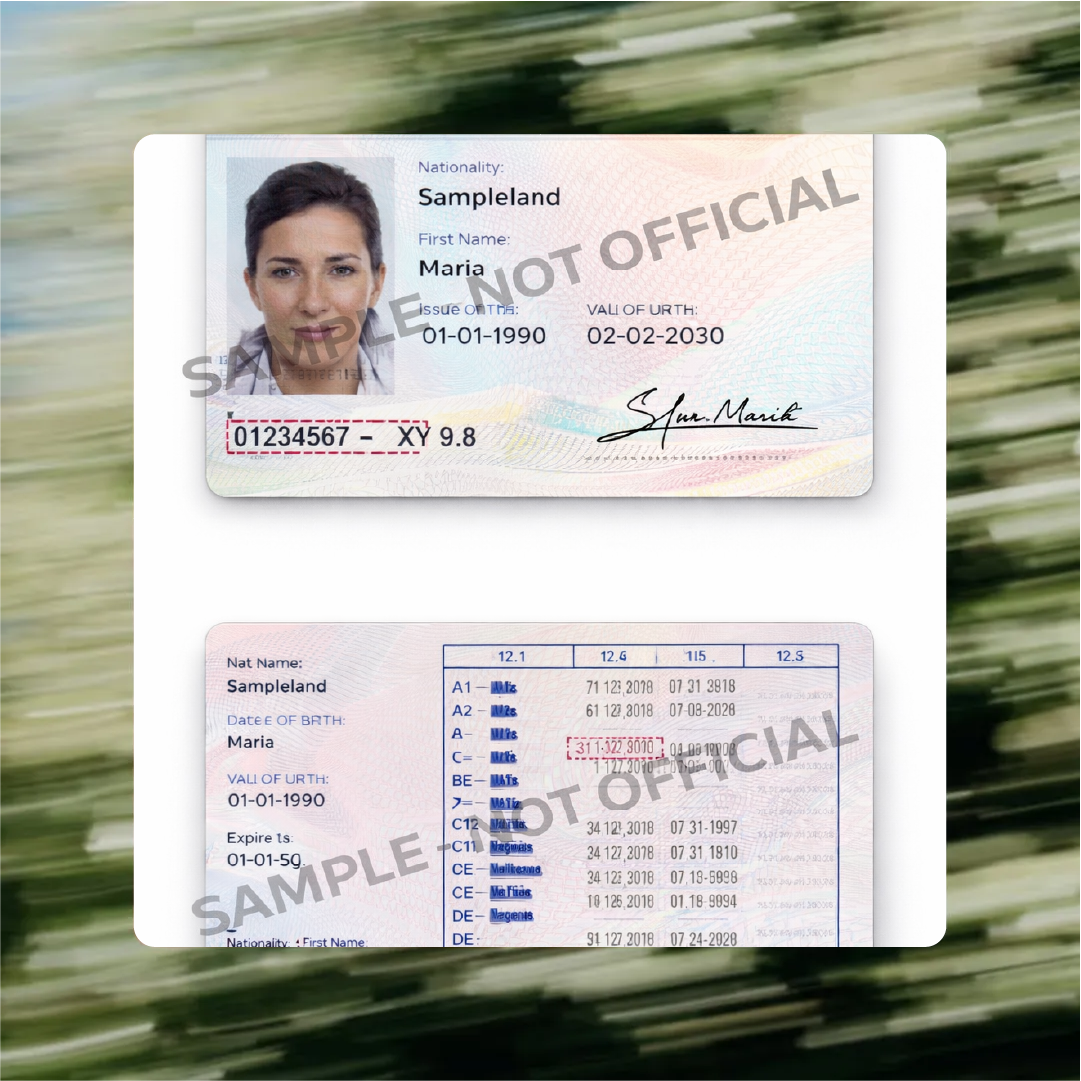
The Luxembourg driving licence is issued by Société Nationale de Circulation Automobile (SNCA) under the loi modifiée du 14 février 1955 and grand-ducal regulations on professional driver qualification and uses the standard EU credit-card format. It transposes EU Directive 2006/126/EC into national law and is fully recognised across all 27 EU member states and the EEA. For professional drivers, the Code 95 endorsement (known locally as Carte de Qualification de Conducteur (CQC)) is either shown on the back of the licence or held on a separate Driver Qualification Card.
Luxembourg Driving Licence Categories at a Glance
Luxembourg uses the harmonised EU category system through its EU/EEA membership. The categories that matter for professional drivers are:
- Category B — standard car licence, prerequisite for all professional categories.
- Category C1 — rigid trucks 3,500–7,500 kg (urban distribution).
- Category C — rigid trucks above 3,500 kg (general haulage). Minimum age 21, or 18 with Code 95.
- Category CE — articulated combinations (long-haul). Requires Category C. Same minimum age as C.
- Category D1 — minibuses (9–16 passengers). Minimum age 21.
- Category D — full buses and coaches. Minimum age 24, or 21 with Code 95.
Category C vs CE — Quick Comparison
| Feature | Category C | Category CE |
|---|---|---|
| Vehicle type | Rigid truck only | Articulated HGV or truck + trailer |
| Trailer permitted | Up to 750 kg | Any authorised mass |
| Prerequisite | Category B | Category C |
| International haulage | Limited | Standard |
| Minimum age | 21 (18 with Code 95) | 21 (18 with Code 95) |
How to Get the Luxembourg Truck Driving Licence
The route to a Luxembourg Category C/CE licence runs through a registered driving school, a medical examination, the theory and practical tests, and licence issuance by SNCA. The standard EU minimum vision standards apply: visual acuity of at least 0.8 in the better eye and 0.1 in the weaker eye (with or without correction), a horizontal field of at least 160°, normal traffic-signal colour recognition and no untreated double vision. Medical reviews are repeated at every renewal and more frequently after age 65.
Practical training under the loi modifiée du 14 février 1955 and grand-ducal regulations on professional driver qualification covers vehicle inspections, low-speed manoeuvring, road and motorway driving and, for Category CE, coupling and reversing trailer combinations. Examiners authorised by SNCA deliver the practical test, which typically lasts 60–90 minutes for Category CE.
Code 95 Integration
Holding the right driving licence category is only half of the requirement for commercial driving. All professional drivers must also hold a valid Code 95 (EU Driver CPC) under EU Directive 2003/59/EC, known locally as Carte de Qualification de Conducteur (CQC). The Code 95 endorsement is typically shown on the back of the driving licence or on a separate Driver Qualification Card.
Code 95 requires an initial qualification followed by 35 hours of periodic training every five years. You can learn the full Code 95 Luxembourg eligibility rules in detail.
Luxembourg Licence Conversion for Non-EU Drivers
Non-EU drivers legally resident in Luxembourg may, in some cases, exchange their existing national driving licence for a Luxembourg one without sitting a full theory and practical examination. Exchange eligibility depends on whether Luxembourg has a bilateral recognition agreement with the country that issued the original licence.
Where no agreement exists, the foreign driver must complete the full Luxembourg licence acquisition process — including the theory examination, practical training and the practical driving test in a vehicle of the relevant category. To begin, register your interest through Truck Driver Registration Europe.
Tachograph & EU Driving Hours Rules
Every professional driver operating commercial vehicles in Luxembourg is subject to EU-wide driving hours rules under Regulation (EC) No 561/2006 and tachograph requirements under Regulation (EU) No 165/2014.
- Maximum 9 hours of driving per day (extendable to 10 hours twice per week)
- Maximum 56 hours of driving per week and 90 over two consecutive weeks
- 45-minute break required after 4.5 hours of continuous driving
- Minimum 11 hours of daily rest and 45 hours of regular weekly rest
- Regular weekly rest cannot be taken in the vehicle cab (EU Mobility Package)
For full guidance, see Check Tachograph Rules & Compliance.
Luxembourg Driving Licence Renewal Rules
| Category | Validity |
|---|---|
| Category B | Typically 10–15 years |
| Category C, C1, CE, C1E | 5 years |
| Category D, D1, DE, D1E | 5 years |
Professional categories must be renewed every 5 years and accompanied by a current medical certificate confirming continued fitness. Code 95 must also be renewed every five years through 35 hours of periodic training.
Luxembourg Truck Driver Salary Insights
Luxembourg has Europe’s highest real wages, and cross-border commuter drivers from France (particularly the Lorraine region), Belgium, and Germany fill the bulk of CE driver positions. Multilingual capability (French, German, Luxembourgish, English) is highly valued.
The Luxembourg Road Transport Sector
Luxembourg’s transport sector is small but unique: the Grand Duchy is a major financial logistics hub, and Cargolux (one of Europe’s largest air cargo carriers) anchors the freight ecosystem. Most HGV traffic is cross-border to and from Germany, Belgium and France, with strong commuter-driver patterns.
Notable Employers and Operators in Luxembourg
Cargolux (major air-cargo handler with associated ground logistics), ArcelorMittal in-house transport, Schenker Luxembourg, and the cross-border commuter operators from Lorraine and the Saarland.
Luxembourg Freight Market Snapshot
Luxembourg has Europe’s highest median wages for HGV drivers in real terms, attracting cross-border commuters from a 100-km radius across France, Belgium and Germany.
Industry Associations and Training Providers in Luxembourg
The Fédération des Industriels Luxembourgeois (FEDIL) Transport division and the Chambre des Métiers represent operators. CPC training is delivered through Chambre des Métiers-affiliated providers and IFSB.
Cross-Border Routes from Luxembourg
Luxembourg City-Trier, Luxembourg-Metz, Luxembourg-Arlon-Brussels and Luxembourg-Saarbrücken are the main short-haul Luxembourg cross-border routes — most Luxembourg drivers cross at least one border on every shift.
Recent Regulatory Updates in Luxembourg
The SNCA (Société Nationale de Circulation Automobile) administers driver licensing and CQC. Luxembourg’s relatively flexible regulatory environment has made it a popular jurisdiction for operator registration.
Common Licence Pitfalls for Luxembourg Drivers
Even experienced professional drivers can fall foul of Luxembourg’s regulatory environment. The most common errors SNCA sees are: driving a CE-class articulated vehicle on a Category C licence (a criminal offence that invalidates insurance); letting Code 95 expire while the underlying licence remains valid; missing the periodic medical examination required for professional categories; tachograph errors such as failing to insert the driver card or selecting the wrong activity mode; and overlooking country-specific extras such as first-aid certification where it is required.
Luxembourg Driving Licence – Requirements & Conversion Guide
Understand the official driving licence requirements for professional and private drivers in Luxembourg. Learn about licence eligibility, driving licence categories (B, C, CE, D), licence conversion rules for non-EU drivers, required documents and legal driving regulations before working or driving in Luxembourg.
This guide explains how to apply for a new Luxembourg driving licence, convert a foreign driving licence, upgrade to truck or bus categories and comply with Luxembourg and EU road transport regulations for professional drivers.
Frequently Asked Questions (FAQs)
Quick answers to the most asked questions about the Luxembourg driving licence, Code 95 and EU driver compliance for professional truck and bus drivers.- How long does it take to get a truck driving licence in Luxembourg?
- Can I drive in Luxembourg with a non-EU driving licence?
- Is Code 95 mandatory in Luxembourg?
- How much does a truck driving licence cost in Luxembourg?
- Can I convert my UK driving licence to a Luxembourg one?
- What is the minimum age to drive a truck in Luxembourg?
- Is a first-aid course required in Luxembourg?
- How often must I renew my Luxembourg professional licence?
- Can I work as a truck driver in Luxembourg without speaking the local language?
- What happens if I lose my Luxembourg driving licence?
- Are there age restrictions for elderly truck drivers in Luxembourg?
- Can non-EU citizens work as professional drivers in Luxembourg?
- What is the difference between a driving school and a Code 95 training centre?
- Are tachograph fines high in Luxembourg?
- Do I need additional permits to transport dangerous goods in Luxembourg?
- Can I use my Luxembourg licence to drive in other EU countries?
- Will Luxembourg adopt the EU Digital Driving Licence?
Final Thoughts
The Luxembourg driving licence is a respected professional credential, supported by training standards, compliance enforcement, and full EU recognition under Directive 2006/126/EC. For domestic drivers, EU nationals relocating to Luxembourg, and non-EU professionals seeking opportunities in Europe, having the correct licence category and a valid Code 95 is essential for a compliant, successful career in road transport.
To recruit qualified, compliant drivers, employers can Hire Professional Truck Drivers through FastDriver. Drivers can register for opportunities or Browse Truck Driver Vacancies in Europe.
Disclaimer
This guide is provided for general informational purposes only and does not constitute legal, medical or professional advice. Luxembourg driving licence laws, regulations, fees and procedures are subject to change and may vary by region. Readers should consult the relevant authorities and qualified professionals before making decisions based on this content. FastDriver makes reasonable efforts to keep information accurate and updated but accepts no liability for any errors, omissions or actions taken in reliance on this guide.
Official Luxembourg & EU References
- Ministère de la Mobilité et des Travaux publics — relevant national authority
- Société Nationale de Circulation Automobile (SNCA) — issuing authority
- the loi modifiée du 14 février 1955 and grand-ducal regulations on professional driver qualification — national legislation governing licensing
- EU Directive 2006/126/EC (driving licences) and EU Directive 2003/59/EC (Driver CPC) — https://eur-lex.europa.eu
- Regulation (EC) No 561/2006 and Regulation (EU) No 165/2014 (driving hours and tachograph) — https://eur-lex.europa.eu
- European Commission — Mobility and Transport — https://transport.ec.europa.eu
About FastDriver.eu
FastDriver.eu is Europe’s trusted platform for professional truck driver recruitment and transport compliance information. We connect verified professional drivers with reputable transport operators across all 27 EU member states, and we provide clear, practical guidance on EU driving licences, Code 95 qualification, tachograph compliance, and driver welfare. For employers, we deliver pre-vetted candidates ready to work. We provide access to opportunities across Europe and clear guidance on every aspect of professional transport regulation.
Related Driving Licence Country Guides
If you operate cross-border, you may also need the driving licence rules for Luxembourg’s neighbours and main trading partners:

Ready to Get Your Luxembourg Driving Licence?
Learn about Luxembourg driving licences, Code 95, CPC training and driver compliance — and connect with FastDriver to find your next professional driving opportunity in Europe.
Check Licence Requirements →
Last Updated: June 4, 2026
This content is reviewed and updated periodically to maintain accuracy and relevance.
Why FastDriver.eu ?
Our mission is to simplify truck driver recruitment across Europe.

Expanding Access
We continuously expand access to qualified, verified EU and non-EU truck drivers across Europe. By adapting to evolving transport demands and regulatory frameworks, we enable employers to secure talent efficiently and at scale.

Streamlining Recruitment
FastDriver.eu removes complexity from the hiring process by simplifying job posting, candidate shortlisting, and coordination. Our structured workflows reduce administrative effort, accelerate hiring timelines, and support informed decision-making.

People-Centered Approach
We place employers and drivers at the core of our platform. By combining industry expertise with a responsible, transparent approach, we deliver trust, reliability, and peace of mind throughout the recruitment journey.
FastDriver.eu is where truck drivers get hired:
Our job portal connects logistics companies with verified truck drivers across Europe and beyond.
5K+
Driver-job matches completed
43+
Countries and territories
200+
Hiring companies

5K+
Driver-job matches completed
43+
Countries and territories
200+
Hiring companies
Get Started with FastDriver
Our Platform
We connect truck drivers, transport companies, and recruiters across Europe through a dedicated driver job platform.

Employer
Register as a company to post truck driver jobs, manage vacancies, and connect directly with qualified professional drivers.

Drivers
Register as a driver to explore truck and commercial driving jobs across Europe and apply directly to verified employers.

Recruiters
Register as a recruiter to post driver jobs, reach active professional drivers, and support employers with fast and efficient hiring.

Trusted by Employers Across Europe

Successful hiring satisfaction

Of drivers and employers receive active support via FastDriver.eu

10+
Do you have any questions?
We support truck drivers, transport companies, and recruiters with job opportunities and driver recruitment across Europe, helping drivers find work and employers hire qualified professionals. Our job portal, FastDriver.eu, allows companies and recruiters to post driver jobs and connect directly with professional truck drivers through a simple, efficient platform.

