
Guide
Andorra Driving Licence Guide for Professional Drivers
Please provide clear, reliable information on commercial driving licence requirements for Andorra drivers, the practical pathway through a neighbouring EU country, training, and EU mutual recognition.
Our guide helps Andorra-based drivers and operators understand the licence categories required for professional driving, the documents required, and the legal process for driving commercially across Europe.
Whether you are applying for a first commercial licence, converting an existing licence or upgrading to truck or bus categories, this guide supports you at every stage.
- Check Andorra Driving Licence Eligibility
- Andorra Driving Licence Categories (B, C, CE, D)
- Licence Conversion for Non-EU Drivers
- Andorra Driving Regulations & Road Compliance
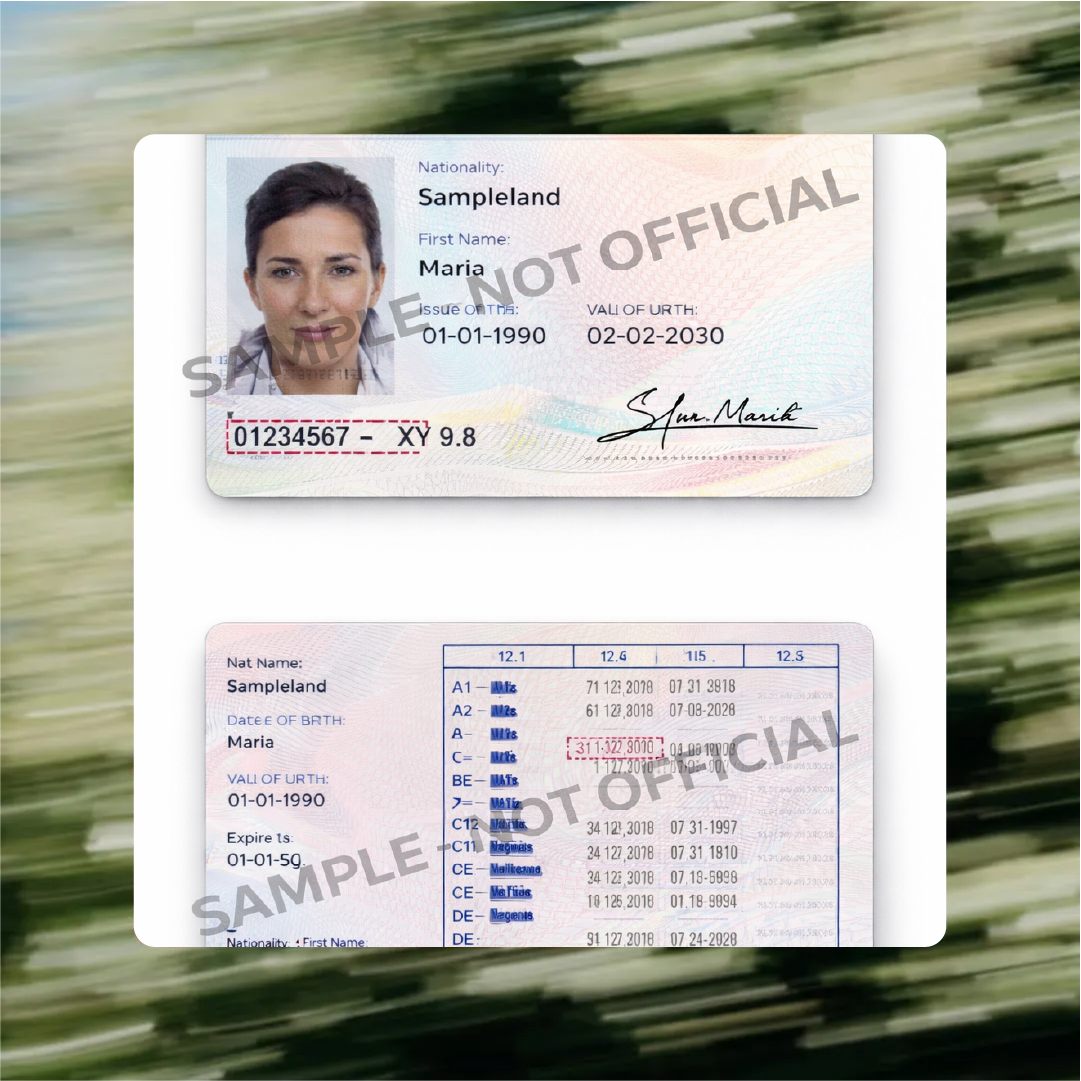
Introduction
Andorra is a small Pyrenean principality between Spain and France, with no rail and very limited freight infrastructure. Almost all goods enter through the French (Pas de la Casa) or Spanish (La Seu d’Urgell) borders, and the country’s freight sector is dominated by Spanish and French operators serving the duty-free retail and tourism markets.
Andorra is a small sovereign state whose commercial road transport is closely integrated with Spain and France. Andorra-based drivers operating commercial vehicles typically qualify under the rules of the surrounding EU country and use EU-recognised driving credentials.
This guide covers the practical licence pathway for Andorra drivers, EU licence categories, foreign licence recognition rules, and the legal framework for commercial driving across the EU.
If you are an employer hiring professional drivers, you can Hire Professional Truck Drivers through FastDriver’s verified driver network. Drivers ready to work can complete Truck Driver Registration Europe to get started.
What is an Andorra Driving Licence?
Andorra’s commercial driving framework is integrated with the surrounding EU countries, and Andorra-based drivers operating commercial vehicles typically use EU-recognised driving credentials issued through that country’s licensing authority under EU Directive 2006/126/EC.
Andorra Driving Licence Categories at a Glance
Andorra uses the harmonised EU category system (or its equivalent for cross-border EU work). The categories that matter for professional drivers are:
- Category B — standard car licence, prerequisite for all professional categories.
- Category C1 — rigid trucks 3,500–7,500 kg (urban distribution).
- Category C — rigid trucks above 3,500 kg (general haulage). Minimum age 21, or 18 with Code 95.
- Category CE — articulated combinations (long-haul). Requires Category C. Same minimum age as C.
- Category D1 — minibuses (9–16 passengers). Minimum age 21.
- Category D — full buses and coaches. Minimum age 24, or 21 with Code 95.
Category C vs CE — Quick Comparison
| Feature | Category C | Category CE |
|---|---|---|
| Vehicle type | Rigid truck only | Articulated HGV or truck + trailer |
| Trailer permitted | Up to 750 kg | Any authorised mass |
| Prerequisite | Category B | Category C |
| International haulage | Limited | Standard |
| Minimum age | 21 (18 with Code 95) | 21 (18 with Code 95) |
How to Get the Andorra Truck Driving Licence
Andorra-based drivers qualify through the surrounding EU country, following that country’s licensing procedure: a registered driving school, a medical examination, and theory and practical tests. EU minimum vision standards (0.8/0.1 acuity, 160° field of view, normal colour vision) apply in all cases.
Code 95 Integration
Holding the right driving licence category is only half of the requirement for commercial driving. All professional drivers must also hold a valid Code 95 (EU Driver CPC) under EU Directive 2003/59/EC, known locally as Certificat d’Aptitud Professional (CAP). The Code 95 endorsement is typically shown on the back of the driving licence or on a separate Driver Qualification Card.
Code 95 requires an initial qualification followed by 35 hours of periodic training every five years. You can learn the full Code 95 Andorra eligibility rules in detail.
Andorra Licence Conversion for Non-EU Drivers
Andorra-based drivers typically use the licence exchange and acquisition framework of the surrounding EU country to obtain EU-recognised driving credentials for commercial work.
Tachograph & EU Driving Hours Rules
Every professional driver operating commercial vehicles across the EU is subject to EU-wide driving hours rules under Regulation (EC) No 561/2006 and tachograph requirements under Regulation (EU) No 165/2014.
- Maximum 9 hours of driving per day (extendable to 10 hours twice per week)
- Maximum 56 hours of driving per week and 90 over two consecutive weeks
- 45-minute break required after 4.5 hours of continuous driving
- Minimum 11 hours of daily rest and 45 hours of regular weekly rest
- Regular weekly rest cannot be taken in the vehicle cab (EU Mobility Package)
For full guidance, see Check Tachograph Rules & Compliance.
Andorra Driving Licence Renewal Rules
| Category | Validity |
|---|---|
| Category B | Typically 10–15 years |
| Category C, C1, CE, C1E | 5 years |
| Category D, D1, DE, D1E | 5 years |
Professional categories must be renewed every 5 years and accompanied by a current medical certificate confirming continued fitness. Code 95 must also be renewed every five years through 35 hours of periodic training.
Andorra Truck Driver Salary Insights
Andorra’s small driver market is supplied largely by Spanish and French commuters. Andorran residency is highly regulated, and most CE drivers working in the principality are cross-border commuters from Catalonia or Occitanie.
The Andorra Road Transport Sector
Andorra is a small Pyrenean principality between Spain and France, with no rail and very limited freight infrastructure. Almost all goods enter through the French (Pas de la Casa) or Spanish (La Seu d’Urgell) borders, and the country’s freight sector is dominated by Spanish and French operators serving the duty-free retail and tourism markets.
Notable Employers and Operators in Andorra
Andorran transport is dominated by Spanish and French operators serving the duty-free retail market — with limited local employment.
Andorra Freight Market Snapshot
Andorra has no rail and very limited road freight infrastructure — almost all goods enter via the French or Spanish borders.
Industry Associations and Training Providers in Andorra
Andorran transport is regulated by the Servei de Tràmits (Mobility Department) under the Govern d’Andorra. There is no large local operator association — most operators are Spanish or French and use those countries’ industry bodies.
Cross-Border Routes from Andorra
La Seu d’Urgell-Andorra la Vella (Spain) and Pas de la Casa-L’Hospitalet (France) are the only two land entries. The Spanish customs check at La Farga de Moles handles the bulk of freight.
Recent Regulatory Updates in Andorra
Andorra is not in the EU or EEA, and its driving licence is not automatically EU-recognised. Andorran-issued licences can typically be exchanged for Spanish or French ones under bilateral arrangements.
Common Licence Pitfalls for Andorra Drivers
For Andorra drivers seeking EU commercial work, the most common pitfalls are: assuming a Andorra national licence is automatically valid for EU commercial driving (it is not — EU Code 95 is required); underestimating the time and cost of obtaining EU credentials; missing the work permit deadline before travelling to the EU; and using outdated information on which EU countries currently have bilateral exchange agreements with Andorra.
Andorra Driving Licence – Requirements & Conversion Guide
Understand the practical driving licence pathway for Andorra drivers, the licence categories accepted, the role of the surrounding EU country in qualification and the rules for commercial driving in the EU.
This guide explains how Andorra-based drivers can secure EU-recognised driving credentials, convert existing licences, and comply with EU road transport regulations for professional drivers.
Frequently Asked Questions (FAQs)
Quick answers to the most asked questions about the Andorra driving licence, Code 95 and EU driver compliance for professional truck and bus drivers.- How long does it take to get a truck driving licence in Andorra?
- Can I drive in Andorra with a non-EU driving licence?
- Is Code 95 mandatory in Andorra?
- How much does a truck driving licence cost in Andorra?
- Can I convert my UK driving licence to an Andorra one?
- What is the minimum age to drive a truck in Andorra?
- Is a first-aid course required in Andorra?
- How often must I renew my Andorra professional licence?
- Can I work as a truck driver in Andorra without speaking the local language?
- What happens if I lose my Andorra driving licence?
- Are there age restrictions for elderly truck drivers in Andorra?
- Can non-EU citizens work as professional drivers in Andorra?
- What is the difference between a driving school and a Code 95 training centre?
- Are tachograph fines high in Andorra?
- Do I need additional permits to transport dangerous goods in Andorra?
- Can I use my Andorra licence to drive in other EU countries?
- Will Andorra adopt the EU Digital Driving Licence?
Final Thoughts
Andorra’s commercial driving framework is integrated with the surrounding EU countries. The practical pathway to a compliant commercial career is to qualify under that country’s rules, then operate freely across the EU using EU-recognised credentials.
To recruit qualified, compliant drivers, employers can Hire Professional Truck Drivers through FastDriver. Drivers can register for opportunities or Browse Truck Driver Vacancies in Europe.
Disclaimer
This guide is provided for general informational purposes only and does not constitute legal, medical or professional advice. Andorra driving licence laws, regulations, fees and procedures are subject to change and may vary by region. Readers should consult the relevant authorities and qualified professionals before making decisions based on this content. FastDriver makes reasonable efforts to keep information accurate and updated but accepts no liability for any errors, omissions or actions taken in reliance on this guide.
Official Andorra & EU References
- Ministeri de Territori i Urbanisme — relevant national authority
- Servei de Tràmits — Mobilitat, Govern d'Andorra — issuing authority
- Andorran transport regulations, with cross-border drivers using Spanish or French EU Code 95 — national legislation governing licensing
- EU Directive 2006/126/EC (driving licences) and EU Directive 2003/59/EC (Driver CPC) — https://eur-lex.europa.eu
- Regulation (EC) No 561/2006 and Regulation (EU) No 165/2014 (driving hours and tachograph) — https://eur-lex.europa.eu
- European Commission — Mobility and Transport — https://transport.ec.europa.eu
About FastDriver.eu
FastDriver.eu is Europe’s trusted platform for professional truck driver recruitment and transport compliance information. We connect verified professional drivers with reputable transport operators across all 27 EU member states, and we provide clear, practical guidance on EU driving licences, Code 95 qualification, tachograph compliance, and driver welfare. For employers, we deliver pre-vetted candidates ready to work. We provide access to opportunities across Europe and clear guidance on every aspect of professional transport regulation.
Related Driving Licence Country Guides
If you operate cross-border, you may also need the driving licence rules for Andorra’s neighbours and main trading partners:

Ready to Get Your Andorra Driving Licence?
Learn about Andorra driving licences, Code 95, CPC training and driver compliance — and connect with FastDriver to find your next professional driving opportunity in Europe.
Check Licence Requirements →
Last Updated: June 4, 2026
This content is reviewed and updated periodically to maintain accuracy and relevance.
Why FastDriver.eu ?
Our mission is to simplify truck driver recruitment across Europe.

Expanding Access
We continuously expand access to qualified, verified EU and non-EU truck drivers across Europe. By adapting to evolving transport demands and regulatory frameworks, we enable employers to secure talent efficiently and at scale.

Streamlining Recruitment
FastDriver.eu removes complexity from the hiring process by simplifying job posting, candidate shortlisting, and coordination. Our structured workflows reduce administrative effort, accelerate hiring timelines, and support informed decision-making.

People-Centered Approach
We place employers and drivers at the core of our platform. By combining industry expertise with a responsible, transparent approach, we deliver trust, reliability, and peace of mind throughout the recruitment journey.
FastDriver.eu is where truck drivers get hired:
Our job portal connects logistics companies with verified truck drivers across Europe and beyond.
5K+
Driver-job matches completed
43+
Countries and territories
200+
Hiring companies

5K+
Driver-job matches completed
43+
Countries and territories
200+
Hiring companies
Get Started with FastDriver
Our Platform
We connect truck drivers, transport companies, and recruiters across Europe through a dedicated driver job platform.

Employer
Register as a company to post truck driver jobs, manage vacancies, and connect directly with qualified professional drivers.

Drivers
Register as a driver to explore truck and commercial driving jobs across Europe and apply directly to verified employers.

Recruiters
Register as a recruiter to post driver jobs, reach active professional drivers, and support employers with fast and efficient hiring.

Trusted by Employers Across Europe

Successful hiring satisfaction

Of drivers and employers receive active support via FastDriver.eu

10+
Do you have any questions?
We support truck drivers, transport companies, and recruiters with job opportunities and driver recruitment across Europe, helping drivers find work and employers hire qualified professionals. Our job portal, FastDriver.eu, allows companies and recruiters to post driver jobs and connect directly with professional truck drivers through a simple, efficient platform.

